Michael Potter is Professor of Logic in the Philosophy Faculty at Cambridge University and a Life Fellow of Fitzwilliam College. He was previously at Oxford, where he took a D.Phil. in pure mathematics and was a Fellow of Balliol College. He spent periods of research leave in the Department of Logic and Metaphysics at St Andrews and the Department of Philosophy at Harvard. In 2004 and 2005 he was on research leave from Cambridge as a Senior Research Fellow at Stirling University funded by the AHRC.
His research interests lie mainly in the history of analytic philosophy (in particular Frege, Russell, Wittgenstein and Ramsey), the philosophy of mathematics, and philosophical logic. He has supervised research students on the following topics:
- Fictionalism
- Animal action and intentionality
- HIlbert's programme and neo-Fregean logicism
- The concept horse
- Ramsey
- Putnam's permutation argument
- Predicative mathematics
- Impredicativity in mathematics
- Harmony
- Prospects for neo-Kantian philosophy of mathematics
- Theories of ontology
- Modal ontological arguments for the existence of God
Lectures
Michaelmas Term 2022
Truth (for Part IB, Paper 1)
Realism and its alternatives (for Part II, Paper 1)
The nature of logic (for Part II, Paper 8)
Wittgenstein, Blue Book (for Part II, Paper 9)
Lent Term 2023
Wittgenstein's Tractatus (for Part II, Paper 9)
Set theory (for Part II, Paper 7)
Russell on denoting and the external world programme (for Part IB, Paper 2)
Easter Term 2020
None
Publications
Books
The Rise of Analytic Philosophy 1879-1930: From Frege to Ramsey, Routledge, 2019
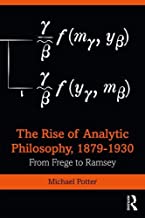
Reviewed in Phenomenological Reviews.
Wittgenstein's Notes on Logic, Oxford University Press, 2009 (paperback edition 2011)
 |
Set Theory and its Philosophy: A Critical Introduction, Oxford University Press, 2004
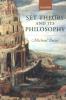 |
Reason's Nearest Kin: Philosophies of Arithmetic from Kant to Carnap, Oxford University Press, 2000 (paperback edition 2002, online edition May 2007)
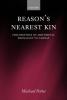 |
Mengentheorie, Heidelberg: Spektrum Akademischer Verlag, 1994
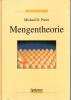 |
This is a German translation (by Achim Wittmüss) of the following. |
Sets: An Introduction, Oxford: Clarendon Press, 1990 [Now almost wholly supplanted by Set Theory and its Philosophy (which was originally conceived as a second edition of it).]
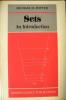 |
Forthcoming book
Wittgenstein's 1916 Transformation
Edited Collections
(Ed. with Peter Sullivan) Wittgenstein's Tractatus: History and interpretation Oxford University Press, 2013
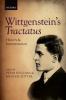 |
(Ed. with Tom Ricketts) The Cambridge Companion to Frege, Cambridge University Press, 2010
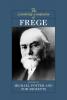 |
(Ed. with Mary Leng and Alexander Paseau) Mathematical Knowledge, Oxford University Press, 2007
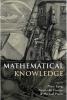 |
Published articles
Some outstanding questions, in Maurice Pope, The Keys to Democracy (Exeter: Imprint Academic, 2023), pp. 189-93
Foreword to new edition of Russell's Introduction to Mathematical Philosophy (Routledge, 2023)
Foreword to new edition of Russell's Essay on the Foundations of Geometry (Routledge, 2023)
How substantial are Tractarian objects really?, Disputatio (Spain), 10 (2021), 93-107
Intuitive and regressive justifications for set theories, Philosophia Mathematica, 28 (2020), 385-94 https://doi.org/10.17863/CAM.57333
Nonsense among the philosophers. in James Williams and Anna Barton (eds), The Edinburgh Companion to Nonsense (Edinburgh University Press, 2019)
Propositions in Wittgenstein and Ramsey. In G. M. Mraas et al. (eds) Philosophy of Logic and Mathematics: Proceedings of the 41st International Ludwig Wittgenstein Symposium (de Gruyter, 2019) ISBN 9783110654301
(With Peter Sullivan) Introduction. In Peter Sullivan and Michael Potter (eds), Wittgenstein's Tractatus: History and interpretation (Oxford University Press, 2013)
Wittgenstein's pre-Tractatus manuscripts: A re-assessment. In Peter Sullivan and Michael Potter (eds), Wittgenstein's Tractatus: History and interpretation (Oxford University Press, 2013)
Frege, Russell and Wittgenstein. In Gillian Russell and Delia Graff Fara (eds), Routledge Companion to the Philosophy of Language(Routledge, 2012) ISBN 9780415993104
Set theory, Philosophy of. Routledge Encyclopaedia of Philosophy, online edition, April 2011
Wittgenstein's philosophy of mathematics. In Oskari Kuusela and Marie McGinn (eds), The Oxford Handbook of Wittgenstein (Oxford University Press, 2011) ISBN 9780199287505
Narodzhennja analytychnoi filosofii. Filosofska Dumka, 2011, no. 3, pp. 47-68 An abridgement and translation into Ukrainian by Oleksiy Panych of "The birth of analytic philosophy".
Introduction. In Michael Potter and Tom Ricketts (eds), The Cambridge Companion to Frege (CUP, 2010), pp. 1-31
Abstractionist class theory: Is there any such thing? In Jonathan Lear and Alex Oliver (eds), The Force of Argument: Essays in Honor of Timothy Smiley(Routledge, 2009), pp. 186-204 A discussion of the philosophical prospects for basing a neo-Fregean theory of classes on a principle that attempts to articulate the limitation-of-size conception.
The logic of the Tractatus. In Dov M. Gabbay and John Woods (eds), Handbook of the History of Logic, vol. 5 (North-Holland, 2009), pp. 255-304 Describes some of the main features of the logic and metaphysics of Wittgenstein's Tractatus.
The birth of analytic philosophy. In Dermot Moran (ed), The Routledge Companion to Twentieth Century Philosophy(Routledge, 2008), pp. 60-92 Tries to identify some strands in the birth of analytic philosophy and to identify in consequence some of its distinctive features.
What is the problem of mathematical knowledge? In Mary Leng, Alexander Paseau and Michael Potter (eds), Mathematical Knowledge(OUP, 2007), 16-32 Suggests that the recent emphasis on Benacerraf's access problem locates the peculiarity of mathematical knowledge in the wrong place. Instead we should focus on the sense in which mathematical concepts are or might be "armchair concepts" — concepts about which non-trivial knowledge is obtainable a priori.
Ramsey's transcendental argument. In Hallvard Lillehammer and D. H. Mellor (eds), Ramsey's Legacy (OUP, 2005), 71-82 Explores the historical and philosophical background to a curious argument of Ramsey's that in the Tractatus the possibility of the infinite proves its actuality.
(With Peter Sullivan) What is wrong with abstraction? Philosophia Mathematica, 13 (2005) 187-93 We correct a misunderstanding by Hale and Wright of an objection we raised in 'Hale on Caesar' to their abstractionist programme for rehabilitating logicism in the foundations of mathematics.
(With Timothy Smiley) Recarving content: Hale's final proposal. Proceedings of the Aristotelian Society, 102 (2002) 351-4 A follow-up, showing why Bob Hale's revision of his notion of weak sense is still inadequate.
(With Timothy Smiley) Abstraction by recarving. Proceedings of the Aristotelian Society, 101 (2001), 327-38 Explains why Bob Hale's proposed notion of weak sense cannot explain the analyticity of Hume's principle as he claims. Argues that no other notion of the sort Hale wants could do the job either.
Was Gödel a Gödelian platonist? Philosophia Mathematica, 9 (2001) 331-46 Gödel's appeal to mathematical intuition to ground our grasp of the axioms of set theory is notorious. I extract from his writings an account of this form of intuition which distinguishes it from the metaphorical platonism of which Gödel is sometimes accused and brings out the similarities between Gödel's views and Dummett's. [Reviews: Zbl 1007.01017, MR 2002g:01014]
Intuition and reflection in arithmetic. Arist. Soc. Supp. Vol., 73 (1999) 63-73 Classifies accounts of arithmetic into four sorts according to the resources they appeal to in constructing its subject matter.
Classical arithmetic as part of intuitionistic arithmetic. Grazer Philosophische Studien, 55 (1998) 127-41 Argues that classical arithmetic can be viewed as a proper part of intuitionistic arithmetic. Suggests that this largely neutralizes Dummett's argument for intuitionism in the case of arithmetic.
Philosophical issues in arithmetic. Routledge Encyclopedia of Philosophy A survey article.
Different systems of set theory. Routledge Encyclopedia of Philosophy A survey article.
(With Peter Sullivan) Hale on Caesar. Philosophia Mathematica, 5 (1997), 135--52 Presents a battery of difficulties for the notion that arithmetic can be based on Hume's principle. [Reviews: Zbl 0938.01016, MR 98h:03009]
Taming the infinite. British Journal of Philosophy of Science, 47 (1996), 609-19 A critique of Shaughan Lavine's attempt in Understanding the Infinite to reduce talk about the infinite to finitely comprehensible terms. [Review: MR 97m:03012]
Critical notice of `Parts of classes' by David Lewis. The Philosophical Quarterly, 43 (1993), 362-366 Argues that Lewis is not as ontologically innocent as he pretends.
The metalinguistic perspective in mathematics. Acta Analytica, 11 (1993), 79-86Tries to find a common source for several well-known paradoxes in mathematics - Skolem's paradox, the permutation argument, and Russell's paradox.
Infinite coincidences and inaccessible truths. In Philosophy of Mathematics, Proceedings of the 15th International Wittgenstein Symposium, Vol. 1(Vienna: Hölder-Pichler-Tempsky, 1993), 307-13Argues, contra Dummett, that the platonist need not be any more committed than the intuitionist to the notion that there are arithmetical truths in principle inaccessible to any finite intelligence.
Iterative set theory. The Philosophical Quarterly, 43 (1993), 178-93Discusses the metaphysics of the iterative conception of set.
Book reviews
Elucidating the Tractatus: Wittgenstein's Early Philosophy of Logic and Language by Marie McGinn. Philosophical Quarterly60 (2010) 192-4
Routledge Philosophy Guidebook to Wittgenstein and the Tractatus by Michael Morris. Notre Dame Philosophical Reviews (2009)
Constructibility and Mathematical Existence by Charles Chihara. Philosophical Quarterly 41 (1991) 345-8
The Philosophy of Set Theory by Mary Tiles. Philosophical Books
Selected talks
- Wittgenstein's early philosophy of religion
Conference on philosophy of religion
LMH, Oxford
14-16 September 2011 - Our grasp of the classical continuum
Prof Leitgeb's seminar series
LMU, Munich
30 June 2011 - Wittgenstein's early philosophy of religion
Conference on philosophy of religion
Krakow
28 June 2011 - 'Sometimes I seemto see a difficulty': Frege's conception of self-subsistence
Colloquium on Frege's Philosophy of Mathematics
Bucharest
28-30 May 2011 - Great Thinkers: Wittgenstein
CLIO (Cambridge University History Society)
Trinity Hall, Cambridge
3 May 2011 - Our grasp of the classical continuum
Set theory and higher order logic
Birkbeck College London
30 March 2011 - Privacy and acquaintance in Frege, Russell and Wittgenstein
Centenary of "Knowledge by acquaintance and knowledge by description"
University of Texas at Austin
26 March 2011 - Our grasp of the classical continuum
Logic Seminar
Cambridge University
24 February 2011 - Privacy and acquaintance in Frege, Russell and Wittgenstein
Logic Seminar
Cambridge
17 February 2011 - Two kinds of ambiguity?
Principa Centenary Symposium
Trinity College Cambridge
27 November 2010 - The role of classes in Principia
One Hundred Years of Principia Mathematica
Trinity College Dublin
12 July 2010, 11am - 12pmThe axiom of reducibility in Principia can be thought of as a class existence axiom. Yet class terms are incomplete symbols which disappear on analysis. I shall discuss the interaction between these two features of the system and relate them to later critcisims of Principia by Wittgenstein and Ramsey.
- Why ZF is not a foundation for mathematics (but nor is ZU)
Paris VII
22 June 2010 - More on replacement
Logic Seminar
Cambridge University
18 February 2010 - More on replacement
Nancy
22 October 2009 - Wittgenstein on solipsism
Department Seminar
Sheffield University
16 October 2009 - Why study philosophy?
UUM, Sintok, Malaysia
30 July 2009 - Classes as ideal elements and limitation of size
The Imaginary, the Ideal and the Infinite in Mathematics
Pont-a-Mousson, France
26th June 2009 - Wittgenstein 1916
Conference on the Tractatus
Clermont Ferrand
8 June 2009 - Wittgenstein and the club but not the poker
Moral Sciences Club
Cambridge University
October 2008 - Where does arithmetic fit into transcendental philosophy?
Transcendental Philosophy and Naturalism
Stewart House, University of London
25 April 2008 - More thoughts on replacement
Philosophy of Mathematics Seminar
Oxford University
29 October 2007 - Wittgenstein in conflict: How the Tractatuswas born
Alumni Weekend
Cambridge University
22 September 2007 - Frege's influence on Wittgenstein
Stapledon Philosophy Colloquium
Liverpool University
30 April 2007 - Set Theory without Replacment
Reinhardt Memorial Lecture
University of Colorado at Boulder
22 March 2007, 3.15-5pm - How much set theory does topology need?
General Topology Seminar
Oxford University
7 March 2007, 4pm - 6pm - Wittgenstein in conflict: How the Tractatus was born
Undergraduate Philosophy Society
Reading University
20 February 2007 -
How abstract is topology?
Conference in honour of Peter Colliins
Mathematical Institute, Oxford
10 August 2006 - How does a set depend on its members?
Colloquium on Set Theory
Neuchatel
20 May 2006 - Wittgenstein's debt to Frege
Workshop on Wittgenstein's Tractatus
Cambridge University
29 April 2006 - Wittgenstein's later philosophy of mathematics: Is there any such thing?
Conference on Wittgenstein's Philosophy of Mathematics
University of Kent at Canterbury
28 January 2006, 2pm - 4pm - The genesis of the Notes on Logic
Logic Seminar
Cambridge University
19 January 2006 - Negative facts in the Notes on Logic
Conference on The Tractatus and its History
Stirling University
10 September 2005 - The genesis of the Notes on Logic
Workshop on Wittgenstein's Tractatus
Stirling University
4 June 2005 - What is wrong with abstractionism?
Neo-Fregean Logicism Seminar
St Andrews University
25th November 2004, 11am - 1pm - Ramsey's transcendental argument for the axiom of infinity
Notre Dame University
22nd September 2004, 3pm - Tatsache, Sachverhalt and Sachlage
Workshop on Wittgenstein's Tractatus
Stirling University
3rd April 2004 - Is the Tractatus really nonsense?
Philosophy Departmental Seminar
Trinity College Dublin
30th January 2004 - Ramsey's transcendental arguments for infinity
Ramsey Centenary Conference
Newnham College, Cambridge
30th June 2003 - Logic and analyticity
Oxford University Philosophical Society
Oxford
14th February 2002 - Mathematics as tautological
Philosophy Department Seminar
Sheffield
20th October 2000 - Hilbertian formalism
Moral Sciences Club
Cambridge
26th January 1999 - Intuition and reflection in arithmetic
Joint Session
Nottingham
July 1998
 |
 |
 |
 |
Contact Details
Postal address: Fitzwilliam College, Cambridge CB3 0DG
Email address: michael.potter@phil.cam.ac.uk